October 21, 2026
If you’re travelling through the South Canadian Rockies in summer, there’s a good chance a pow wow is happening somewhere nearby—a swirl of colour, the deep pulse of the drum, and a whole community gathered together. For a first-time visitor, it can be dazzling. It can also be one of the most welcoming, joyful, and memorable experiences you’ll have in Blackfoot territory. Here’s what to expect, and how to be a good guest.
First, What A Pow Wow Actually Is
A pow wow is a celebration—of culture, family, and connection. “Pow wows are gatherings where people come together to celebrate culture, family, relationships, and traditions,” notes Cassie Ayongman, a Siksika Nation member and tourism coordinator with Destination Blackfoot. “I would suggest: come with respect and an open mind.”
They’re also deeply social. “For us as Blackfoot people, pow wows are social events, family events, free of any drugs or alcohol,” explains Kimmy Shade, CEO of the Blackfoot Confederacy Tribal Council. “They’re just really fun gatherings.” Most of the outdoor pow wows run through the summer months, so as Shade advises with a laugh: “Stay hydrated, as it gets pretty warm!”
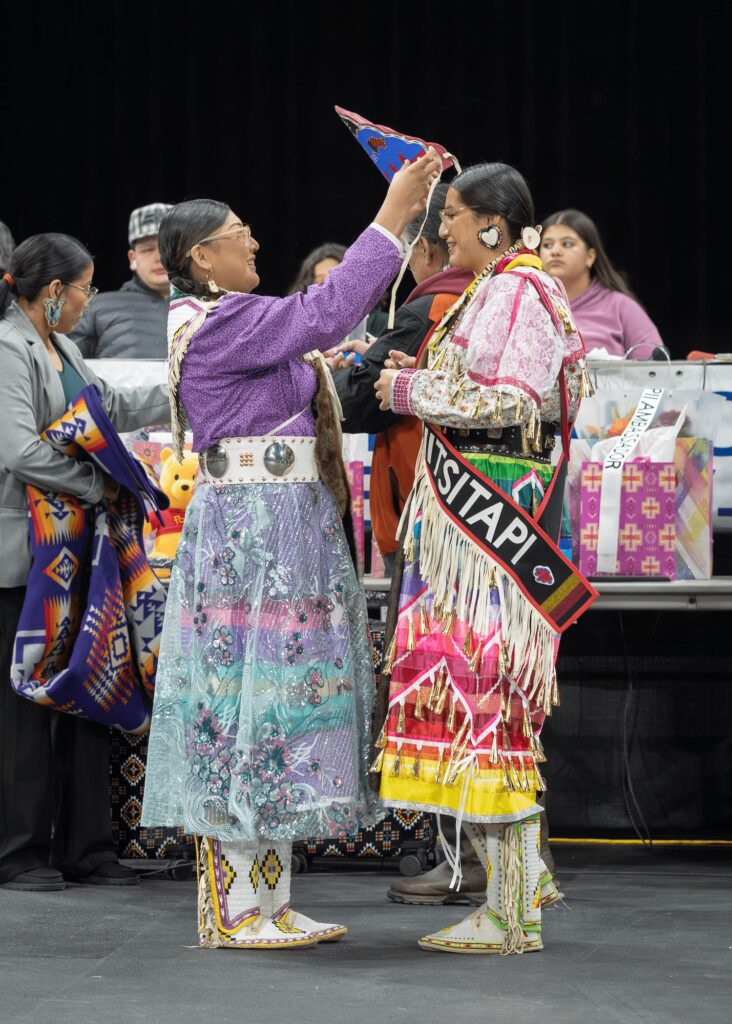
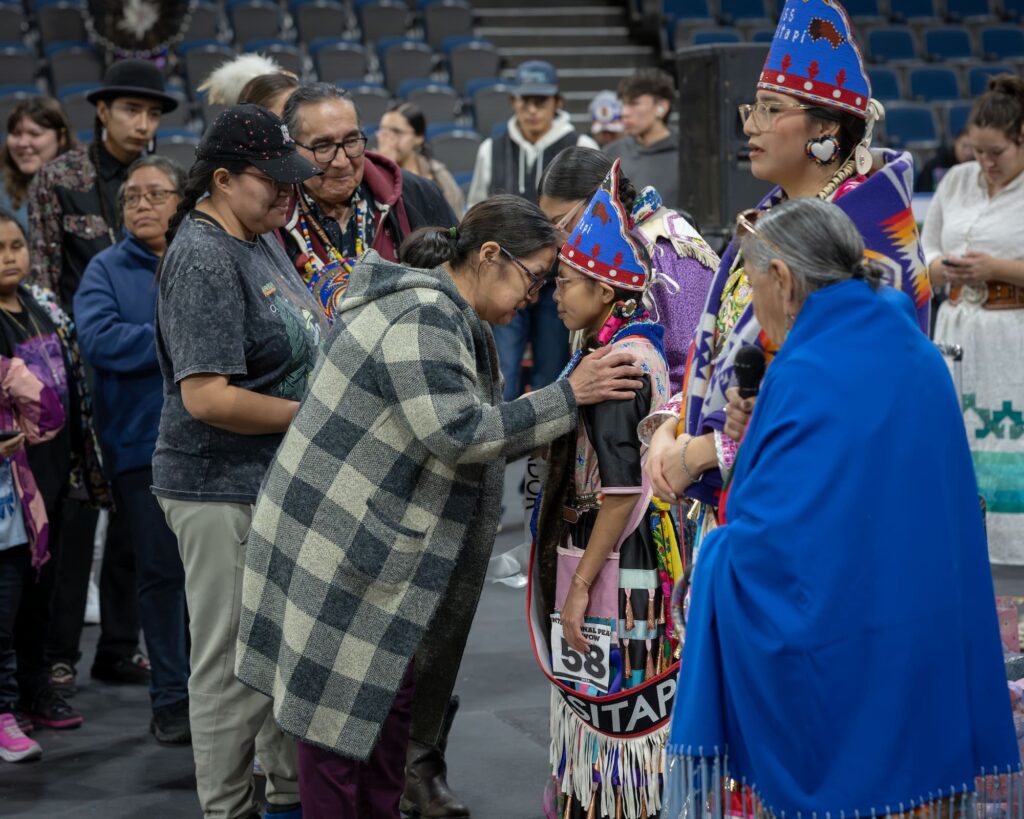
While pow wows are social rather than ceremonial gatherings, meaningful moments still unfold throughout the day. “Some significant transfers happen during pow wows,” Shade notes. “You’ll see headdress transfers, or people who have done things within our community that really need to be recognized, and so there’ll be a lot of honourings done.” Families often host “specials” to honour loved ones who have passed — moments of gratitude and generosity shared with everyone present.
The Grand Entry
The pow wow opens with the Grand Entry, and this is a moment to be on your feet. As Rebecca Many Grey Horses writes in her Blackfoot narrative of the region, the Eagle Staff leads the procession, followed by flags—usually carried by Indigenous war veterans—and then the dancers in full regalia. Always stand during the Grand Entry; the Master of Ceremonies will let you know when to stand for other honour songs throughout the day.
The Dances
Much of a pow wow revolves around dancing, and each style carries its own history, meaning, and movement. The dances originate from legends, sacred societies, and dreams. Men typically dance the Traditional, Grass, Fancy, and Chicken styles, while women dance the Traditional, Jingle, and Fancy Shawl styles.
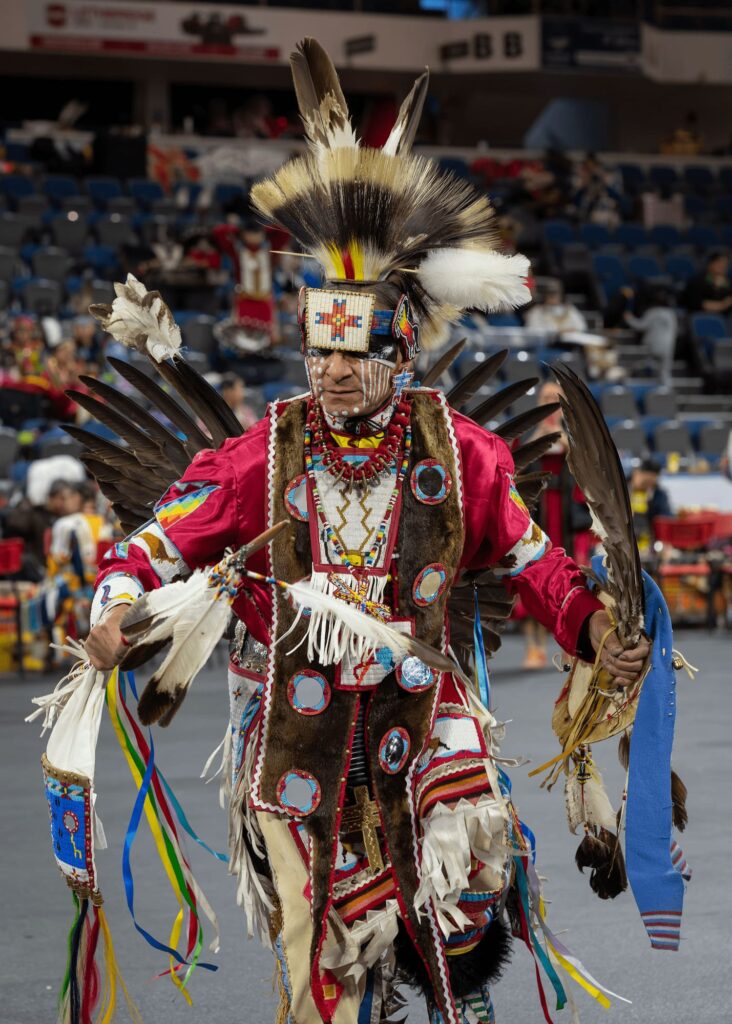
Among the men’s dances, the Northern Traditional dancer wears a roach of porcupine hair and deer tail hair, an intricately beaded vest, and extensive beadwork throughout—a style said to re-enact a warrior searching for the enemy. The Grass Dance began as a Warrior Society dance; its regalia stands out for what it lacks—few feathers and no large bustles—with ribbons and fringe that flow and sway in a smooth, old-time style. The Fancy Dance is the most energetic of all, combining fast, hard footwork with spinning and up-and-down movement, and is instantly recognizable by its large, brightly colour-coordinated feather bustles.
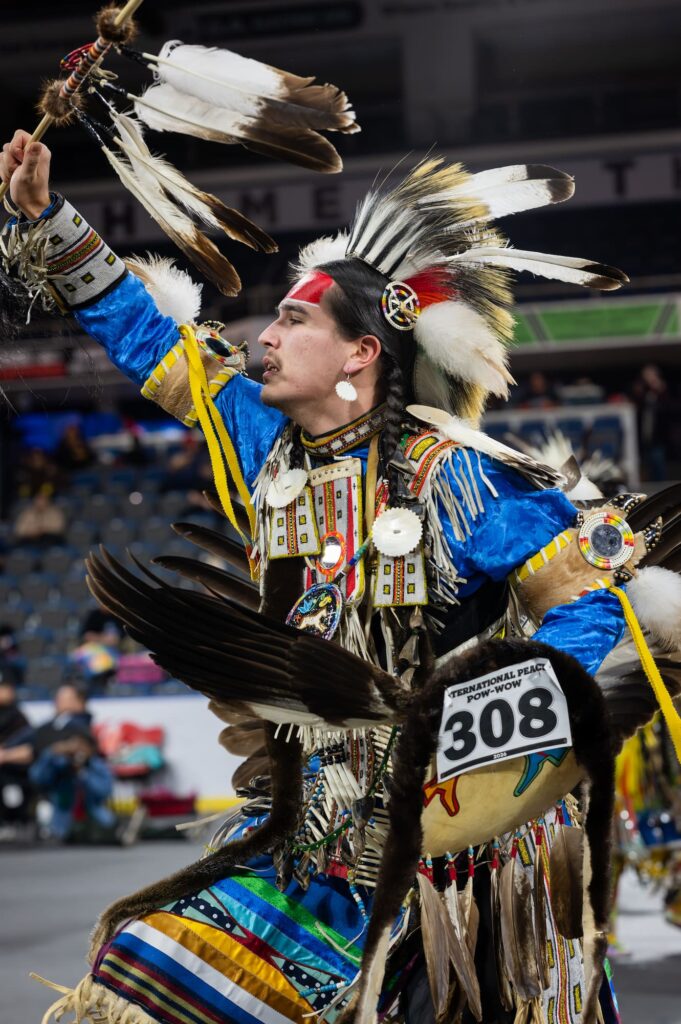
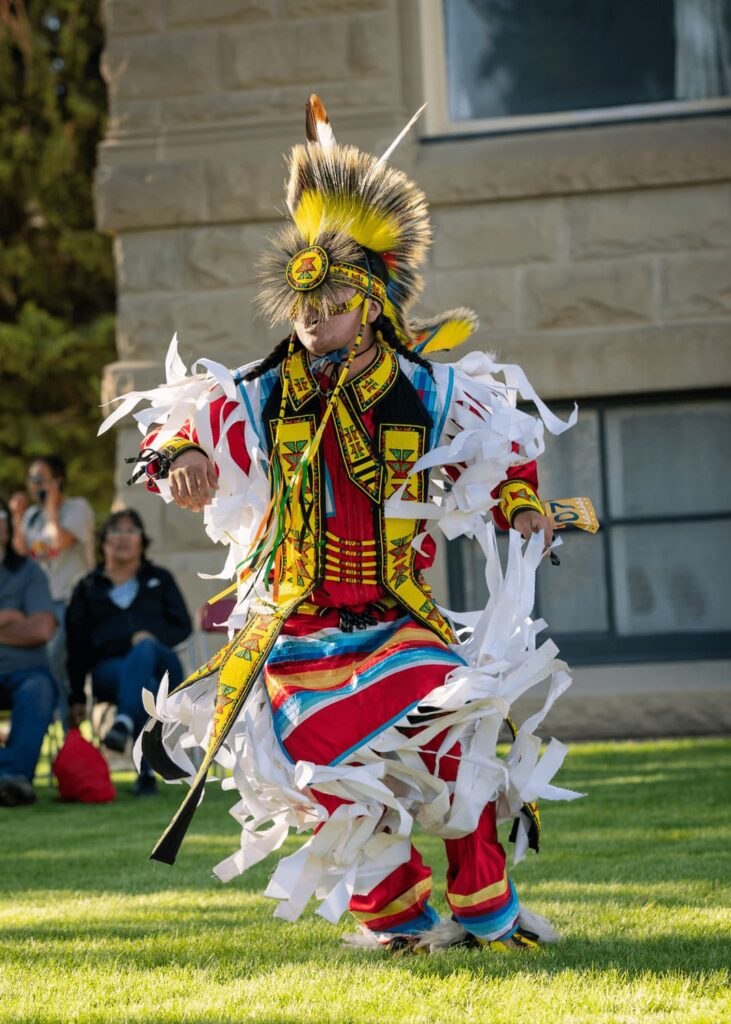
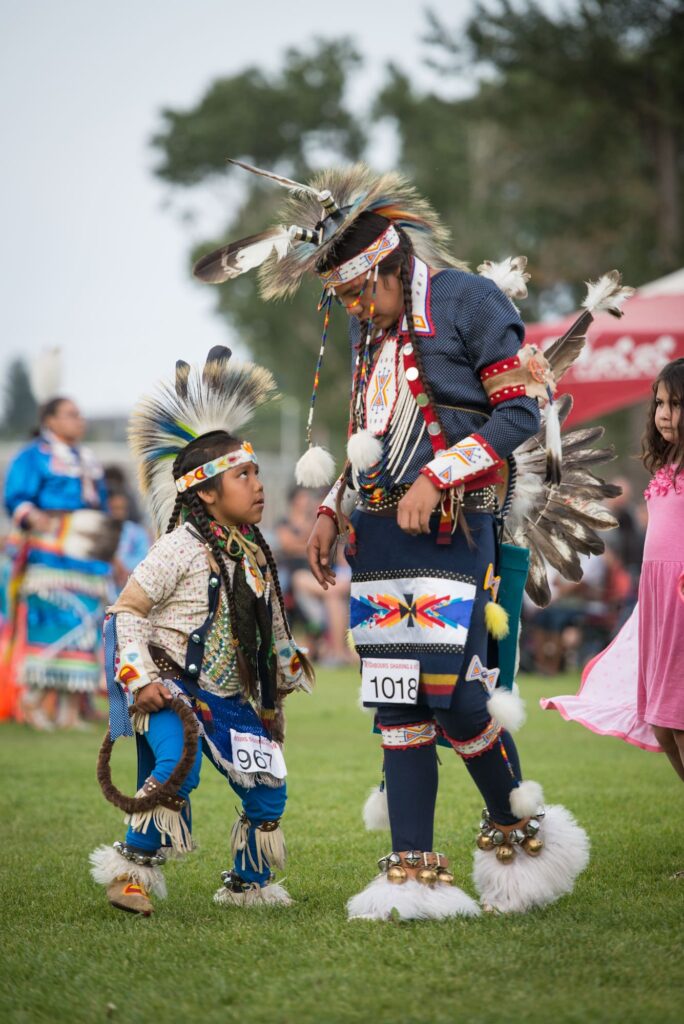
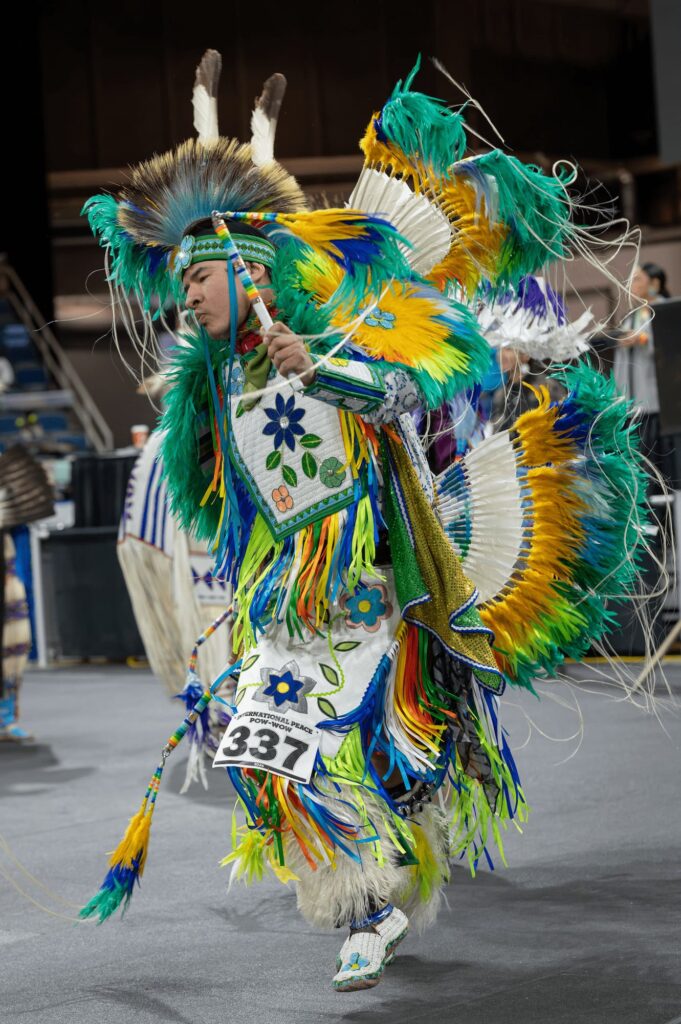
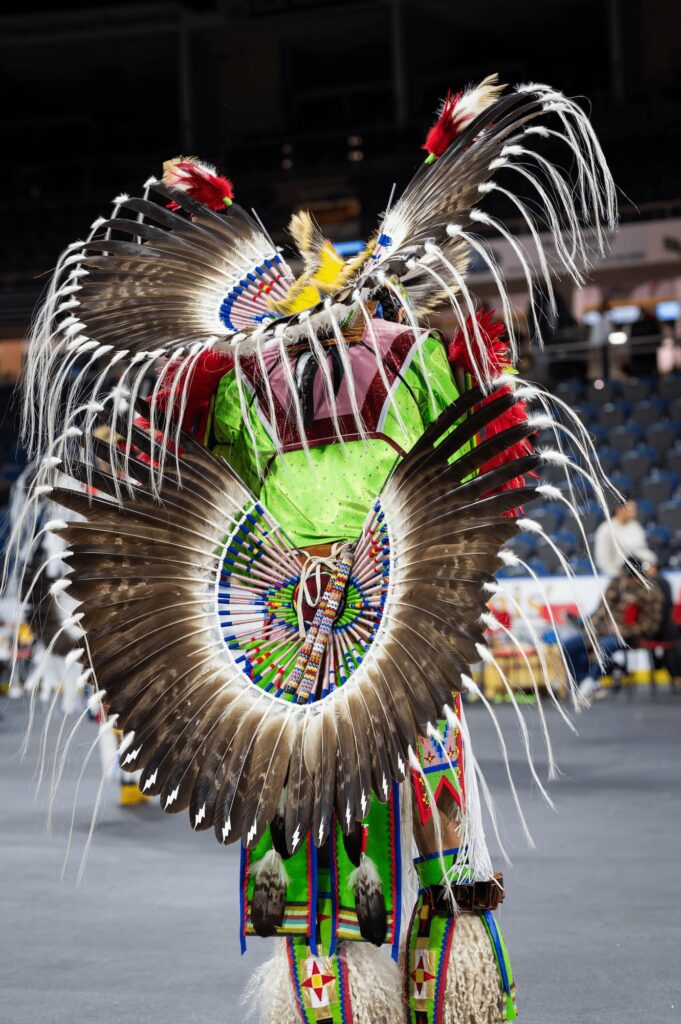
The Chicken Dance holds special significance here, because it comes from the Blackfoot people themselves. One of the oldest forms of dance, the Prairie Chicken Dance mimics the prairie chicken’s springtime mating display through intricate body movements and dance steps. It began with a religious society known as the Kiitokii Society, which is still practiced today in Siksika. Shade describes it warmly: “The Prairie Chicken Dance is something that the Blackfoot people created, and it mimics a prairie chicken… So they all have significance to them, and the way that their regalia is designed, the colours that they utilize are sometimes very specific to certain families or different nations, and they’re carried down from a lot of their ancestors.”
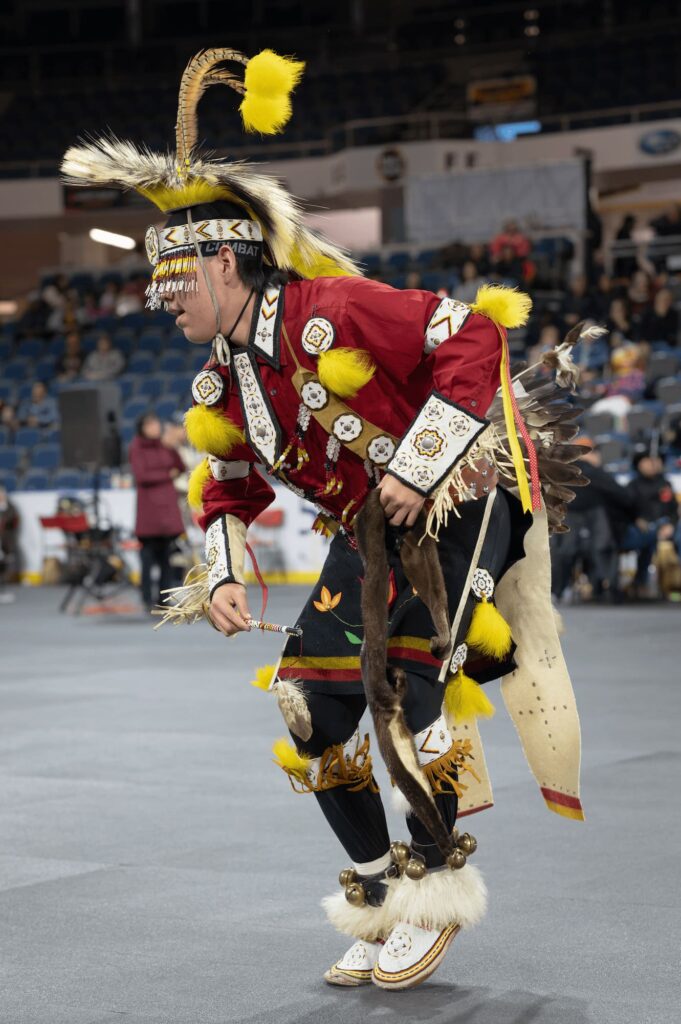
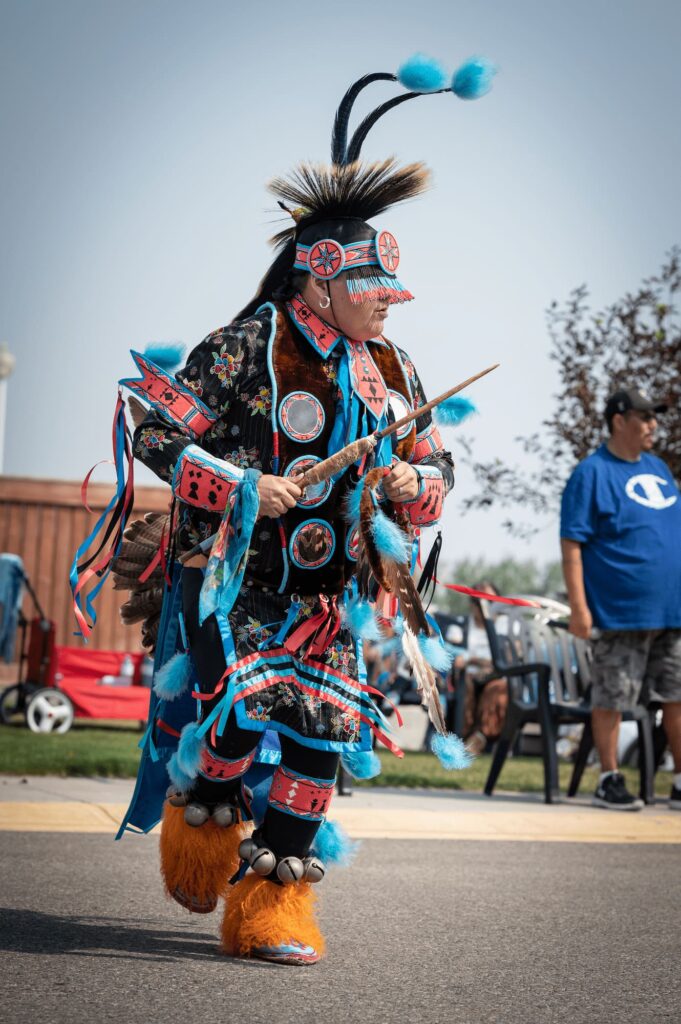
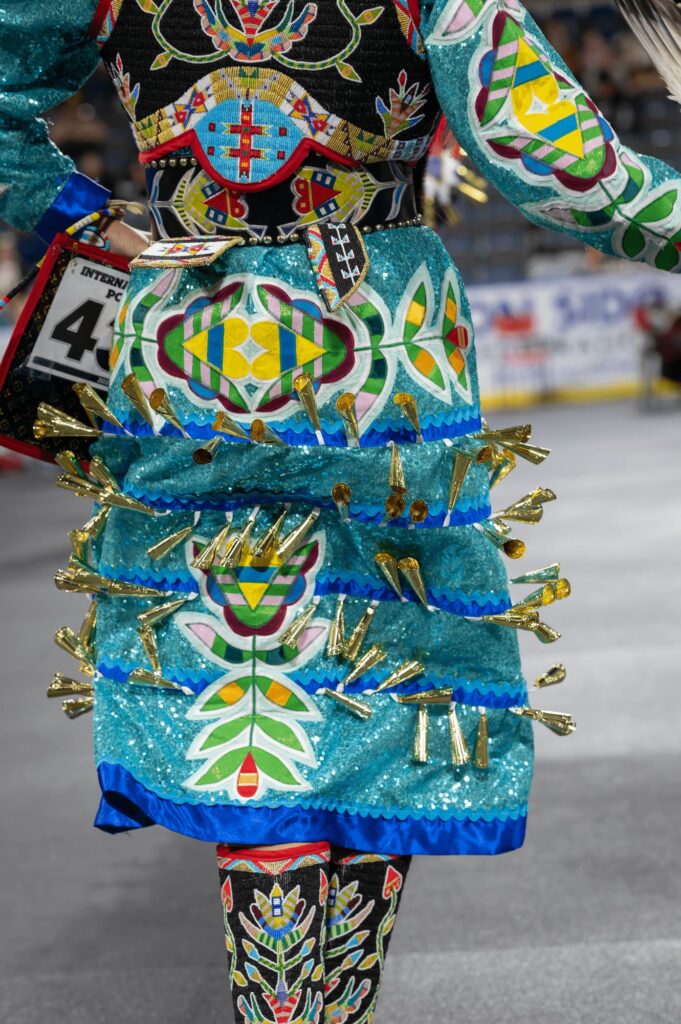
Among the women’s dances, the Traditional Style is one of the oldest—a dance of grace and sophistication, smooth and flowing, performed in fully beaded buckskin dresses with a fringed shawl carried over one arm. The Jingle Dress Dance, first seen in a dream as a healing dance, takes its name from the rows of metal cones—ziibaaska’iganan—sewn to the dress; traditionally 365 of them, creating a melodic sound as the dancer moves light on her feet, kicking her heels and bouncing on her toes in perfect time with the drum. The Fancy Shawl Dance is the newest women’s style, with dancers in bright multicoloured shawls jumping and spinning to mimic butterflies in flight.
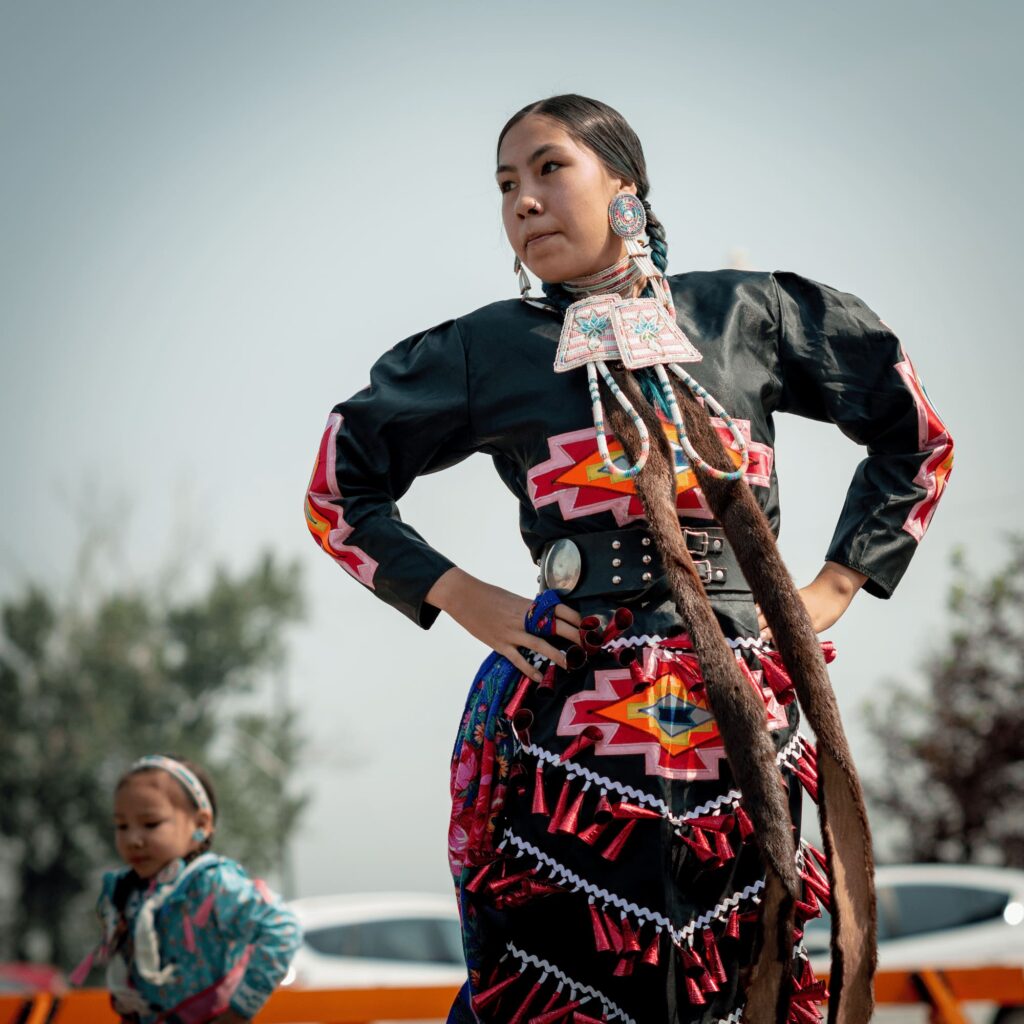
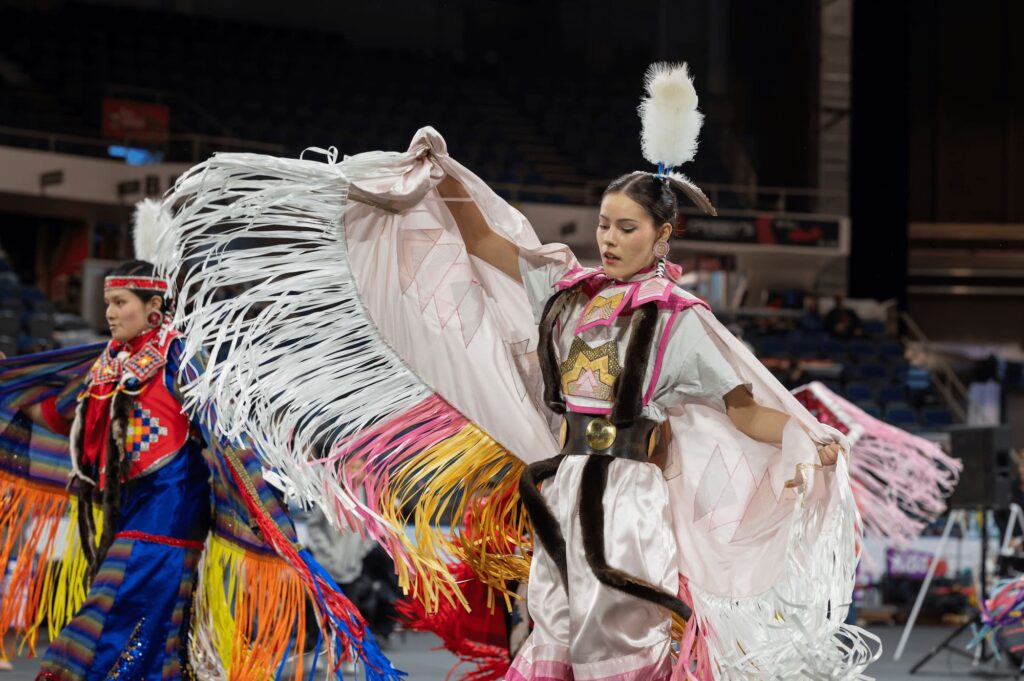
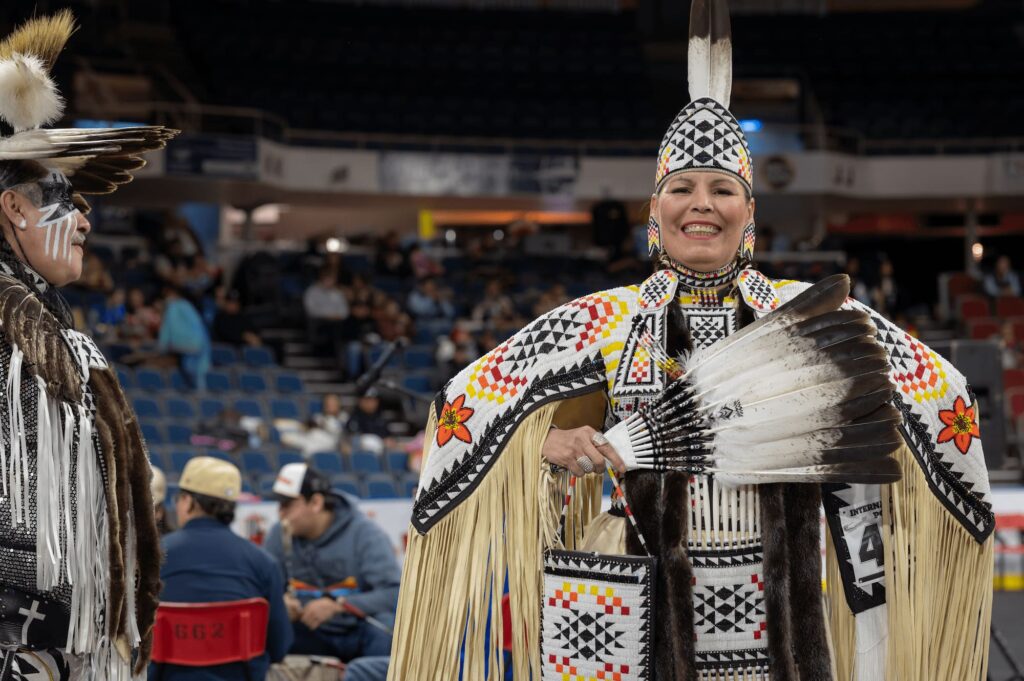
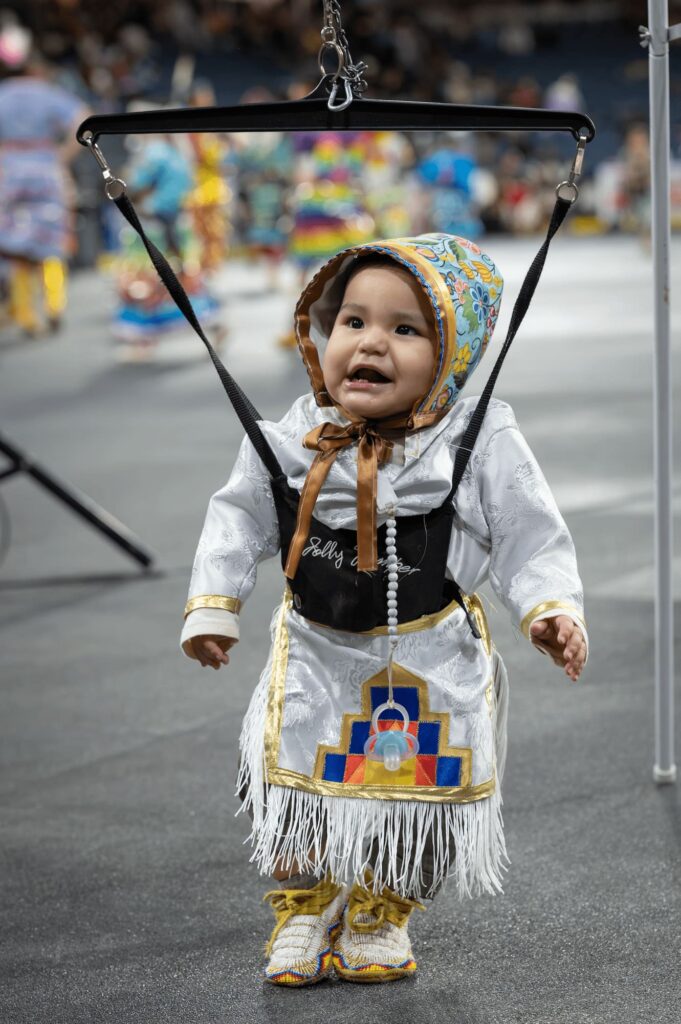
And don’t miss the smallest dancers of all. “You’ve got the Tiny Tots, and they’re really cute and fun to watch,” Shade says. From the Tiny Tots through the youth, adult, and senior categories, every generation dances. “You can honestly go up to any one of them and ask about what they’re wearing, the different dances that they have.”
Regalia, Not Costumes
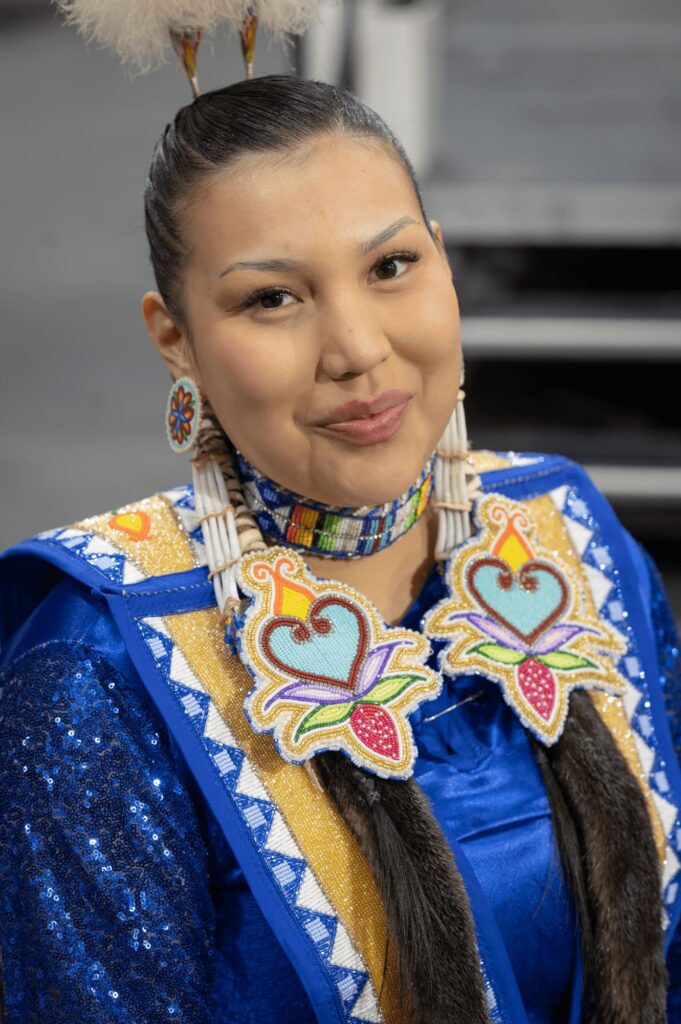
One of the most important things to know: a dancer’s outfit is called regalia, never a costume. Many hours go into creating the beadwork, and the designs are often specific to families and nations, depicting animals, nature, and stories passed down through generations.
Two simple rules of respect go a long way. “It’s important to also just not go ahead and touch someone’s regalia at a pow wow,” Ayongman says. “Also, before taking photos, asking the person if you have permission.” A quick, friendly ask is always welcome.
The Drum, The Food, and The Visiting
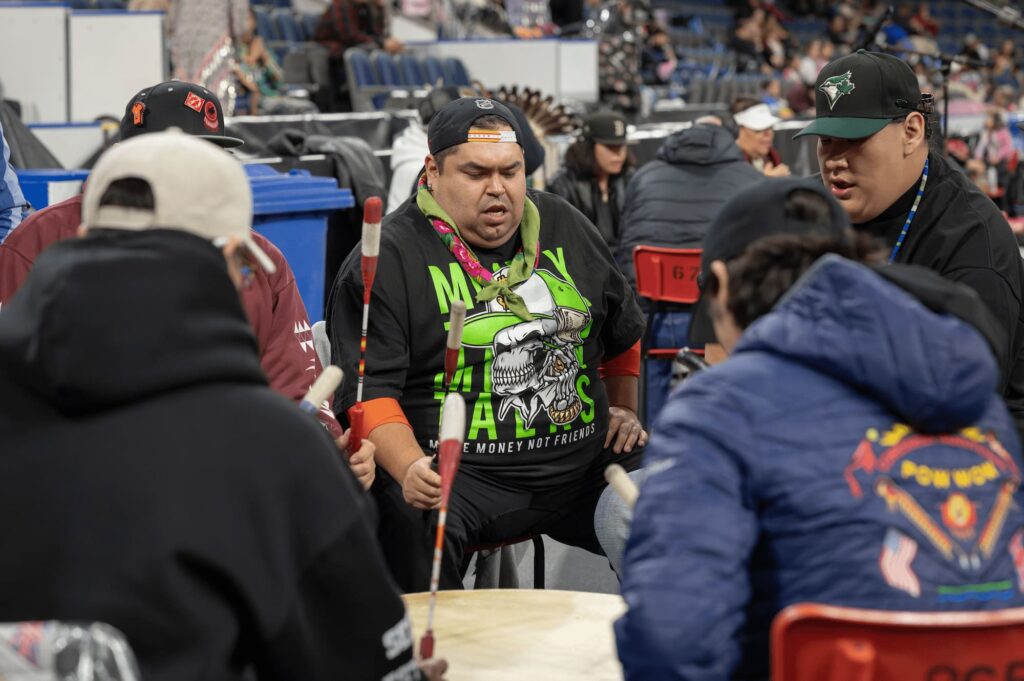
At the center of every pow wow is the drum. Never touch or play a drum without permission—but the drummers themselves are wonderful to learn from. “The drummers are always happy to share the significance of the drum—you know, even how to make some of the drums,” Shade says. “There’s hand drums, there’s big drums. So yeah, I mean, there’s lots to learn.”
Then there’s the food and the fellowship. “Lots of really good food and visiting!” Shade says. You’ll also find artisans and vendors selling authentic arts and crafts—”so you could also take a piece of whichever pow wow home with you.” As Ayongman puts it: “There’s beadwork, there’s food to really try out at the pow wows. And ask questions; come with curiosity.”
Everyone’s Invited To Dance
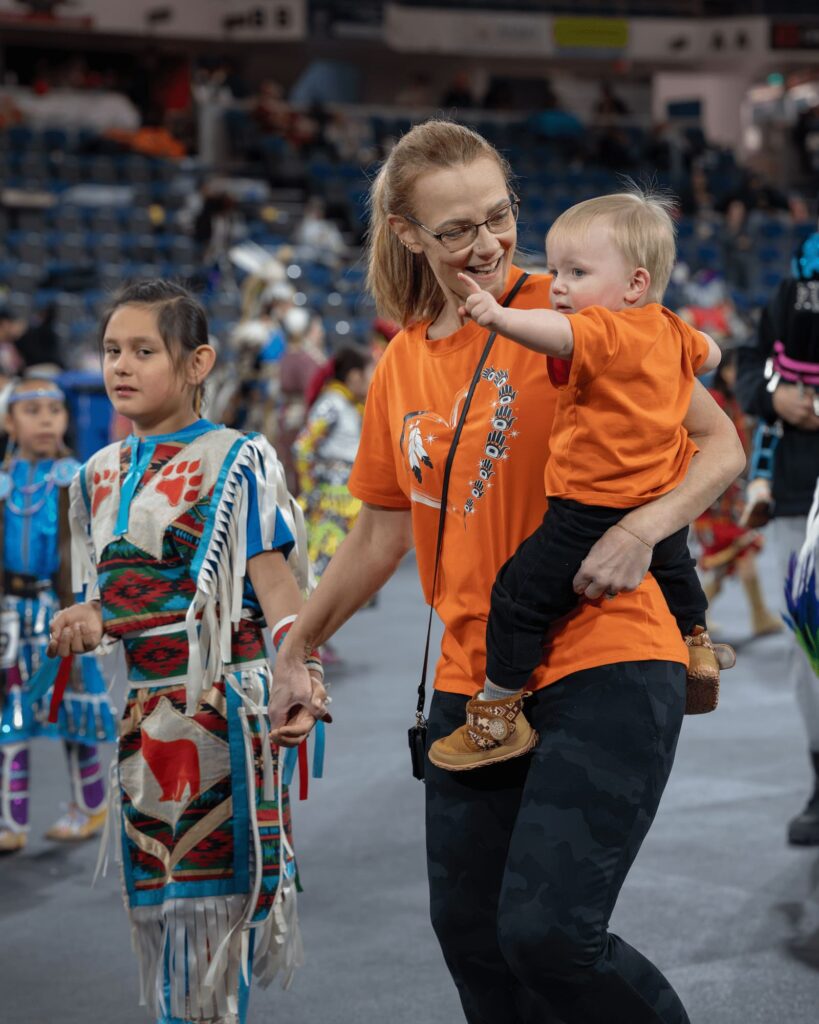
Here’s the best part for a first-timer: you don’t have to watch only. “During the intertribal, everyone’s encouraged to dance,” Shade says. “So that’s kind of fun for people who haven’t been to a pow wow to participate.” When the Master of Ceremonies calls an intertribal, step out and join in.
Above all, come as a respectful, curious guest. “Being respectful, as you go out, it’s reciprocated in terms of that mutual respect,” Shade says. “It’s an opportunity to hear the language and understand the culture a little bit better and create those friendships as you move forward.”
Ready to experience one for yourself? Explore Blackfoot experiences, events, and operators across all four nations at destinationblackfoot.com—and start planning your visit to Blackfoot Territory.

Share This Story