October 23, 2026
Some places you visit. Others have been waiting for you since time immemorial. In the heart of the South Canadian Rockies and the plains that roll out beneath them, the Blackfoot Confederacy has launched an initiative that invites travellers to do more than pass through—it invites them to connect. It’s called Destination Blackfoot, and it may be the most authentic way to experience this landscape.
An Initiative Told By Us, For Us
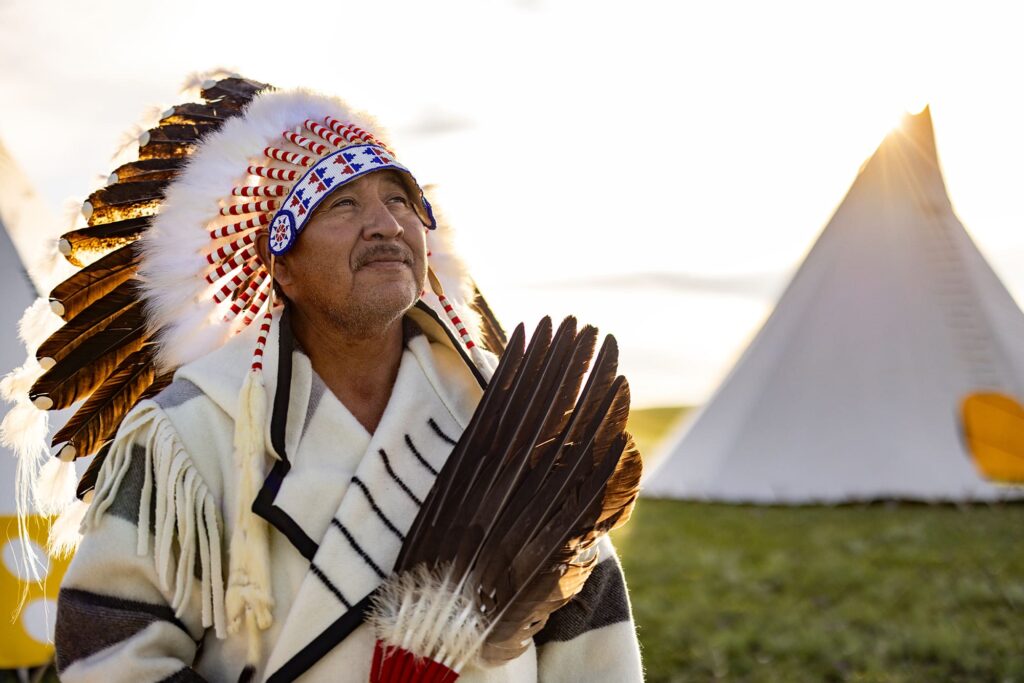
Destination Blackfoot is a first-of-its-kind, Blackfoot-led tourism initiative spanning all four nations of the Confederacy: Siksika, Kainai, Piikani, and Amskapi Pikuni. Where most travel guides describe a place from the outside looking in, this one is written from within.
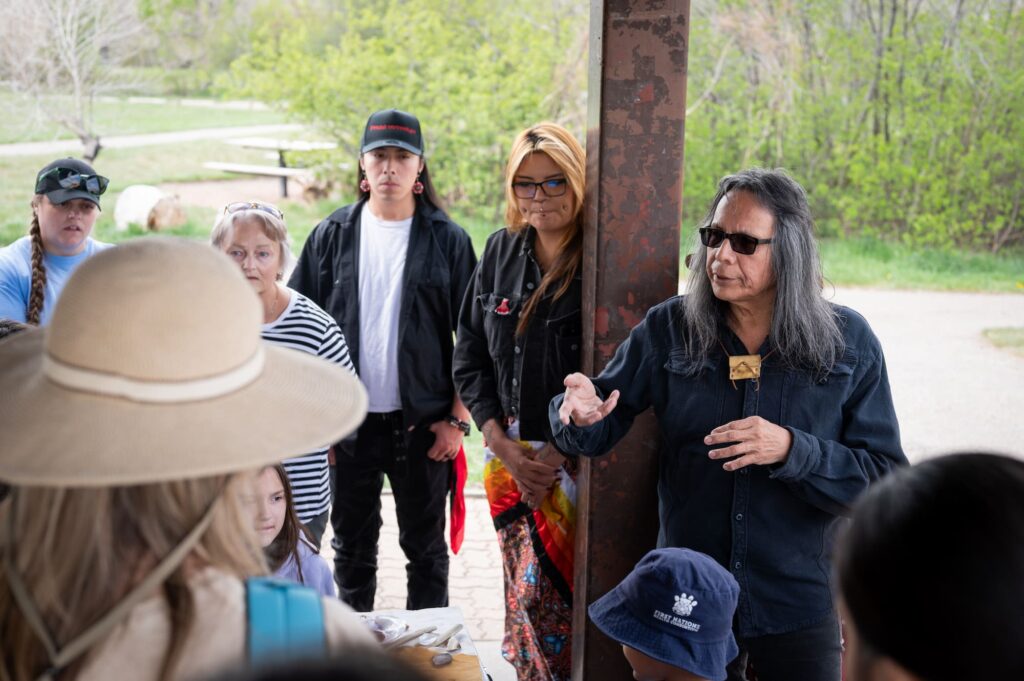
“Destination Blackfoot is a Blackfoot-led initiative that promotes and connects visitors to authentic experiences, our culture, and opportunities to learn about the Blackfoot way of life,” explains Cassie Ayongman, tourism coordinator for the initiative and a member of Siksika Nation. “We represent the four nations… What makes Destination Blackfoot significant is we’re giving the business operators an opportunity to share their story through their experiences and, you know, carrying our ways forward.”
That’s the heart of it. Behind the initiative are more than 100 tourism operators across the four nations—most of them family-owned entrepreneurs offering everything from guided experiences and cultural teachings to artisan-made beadwork, accommodations, and food. Destination Blackfoot brings them together into one place, complete with a custom interactive map, so travellers can find them, learn their stories, and book real experiences with the people who live them.
The Backbone of the World
To understand why this matters, it helps to understand how deeply the Blackfoot people belong to this land. Theron Royal, communications and corporate relations manager for the Confederacy Tribal Council, describes coming to that understanding himself through the nation’s own histories.
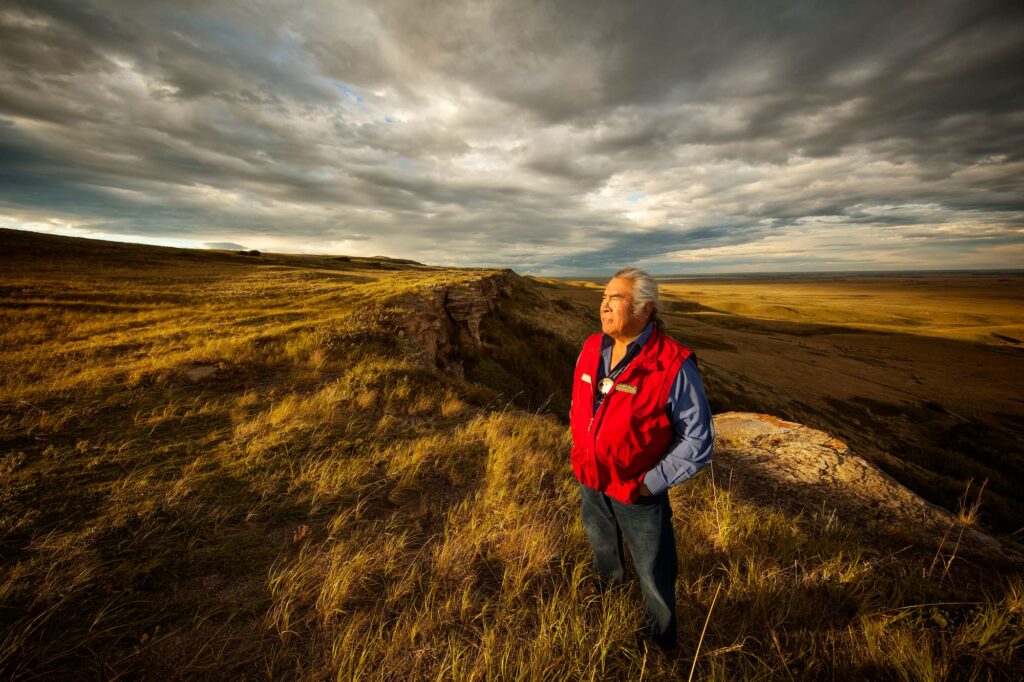
In the creation stories of the Blackfoot People, Royal notes, “there’s no mention of us migrating here.” The area, he explains, “is known as the backbone of the world.” Stories like Napi and the Rock tie the people directly to these mountains, rivers, and plains. “We’ve always been here, and there are so many archaeological records and our creation stories that really tie that in. I was a bit of a skeptic before, but now that I know it and I know those stories and I researched it, it’s legit.”
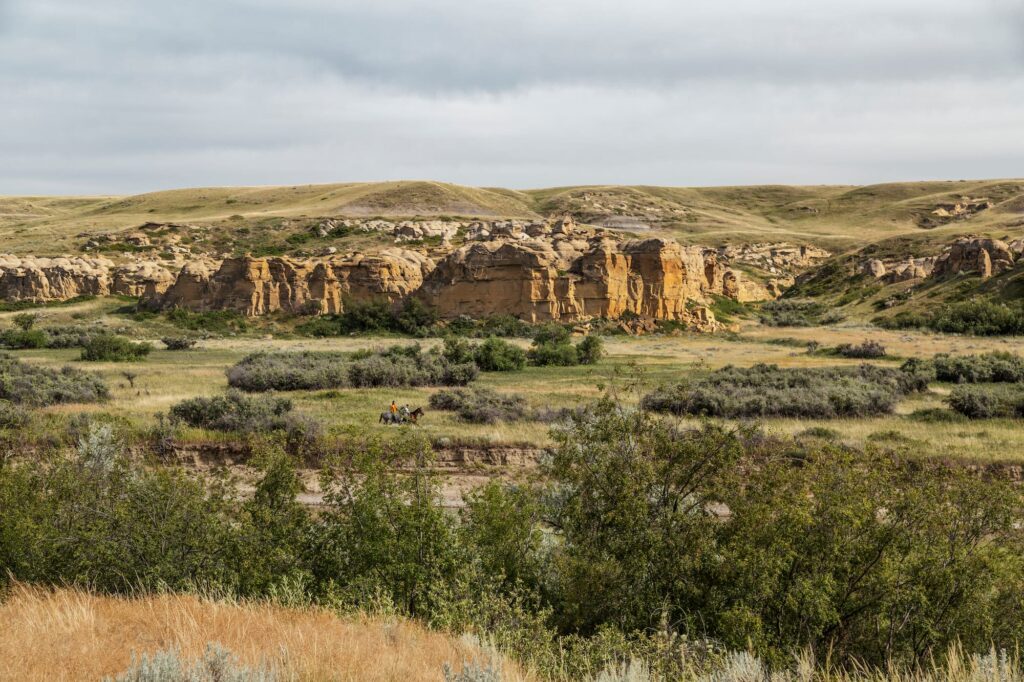
For a visitor, that changes what a mountain view is. The peaks along the South Canadian Rockies aren’t just scenery—they are the backbone of the world, and the people who can tell you what that means are ready to share it.
Crossing the Medicine Line
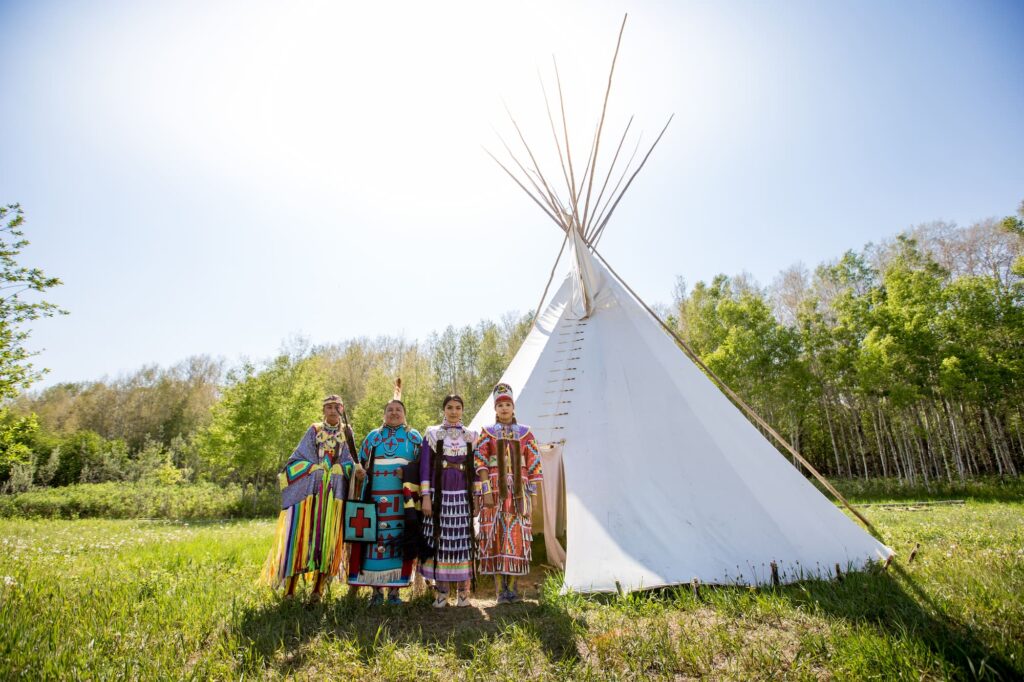
The Blackfoot Confederacy has always been one people across what is now an international border—three nations in Alberta and one in northern Montana. Destination Blackfoot honours that reality instead of being divided by it.
“Half of our people are in the US, and half of us are in Canada,” says Kimmy Shade, CEO of the Blackfoot Confederacy Tribal Council. “So whenever we can create these networks when it comes to tourism and unite our people… it’s living up to what our ancestors practiced in terms of living on both sides of the medicine line. And really having that sovereign attitude in terms of tracing the footsteps of our ancestors, and how we’re traversing the land, and how we’re encouraging tourism on our full landscape, our full territory.”
For travellers, that cross-border vision opens up a landscape far larger than any single park or town—one continuous territory to explore, north and south of the line.
The Most Eco-Friendly Operators You’ll Find
Another reason a Destination Blackfoot experience feels different from typical tourism is that it treads lightly, by design and by value.
“Ecotourism—because of the limited infrastructure… Blackfoot tourism operators are the most eco-friendly tourism operators you will find in the world,” Shade says. Working within real constraints, operators lean on water conservation and renewable energy wherever they can. But the deeper principle is older than any of that. The operations reflect “really caring and taking stock of the authenticity, again, of our ancestors and how they traversed the land in terms of not overharvesting, not staying in one place too long.”
That seasonal, low-impact rhythm—following the land rather than exhausting it—comes straight from a way of life stretching back thousands of years. It means the places you visit are cared for, and will be cared for long after you leave.
Go Beyond the Usual
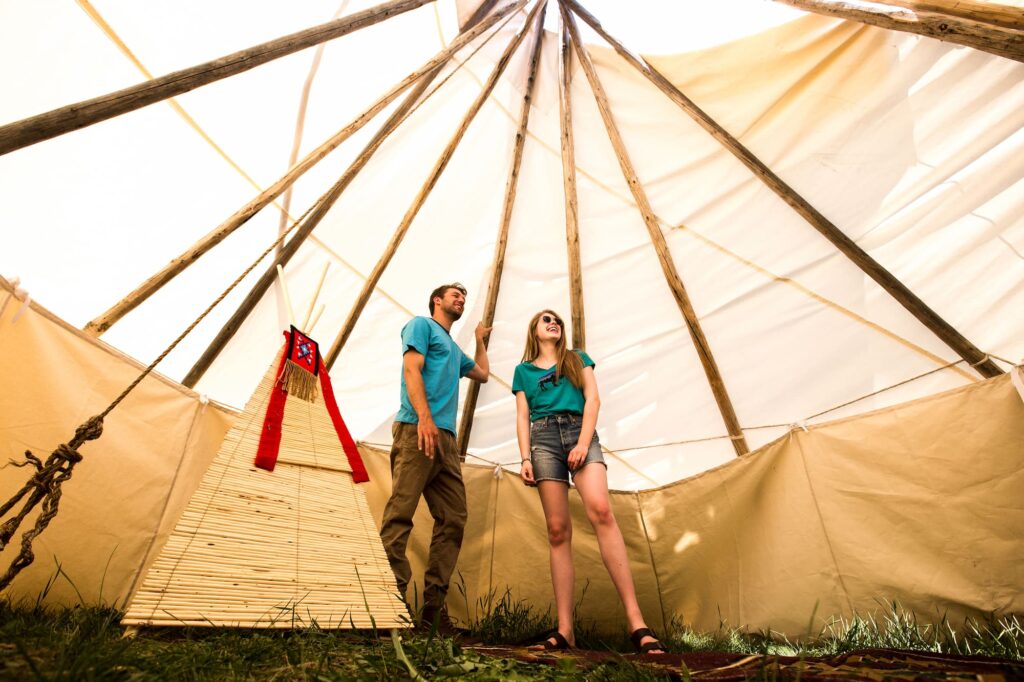
Whether it’s your first pow wow, a walk through a landscape shaped by creation stories, a piece of handmade art to carry home, or a conversation with an operator whose family has stewarded this territory for generations, Destination Blackfoot offers something you can’t find anywhere else: the Blackfoot way of life, shared by the Blackfoot people themselves.
Come with respect and an open mind, as Cassie Ayongman suggests—with curiosity and questions. You’ll find the welcome is warm and the connection is real.
Start exploring at destinationblackfoot.com, where the interactive map will guide you to operators, experiences, and hidden gems across all four nations. The backbone of the world is waiting.

Share This Story